https://barneykessel.bluemusicgroup.com
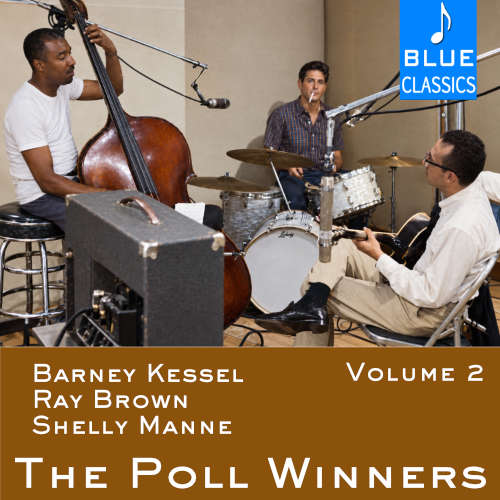 The Poll Winners Vol 2
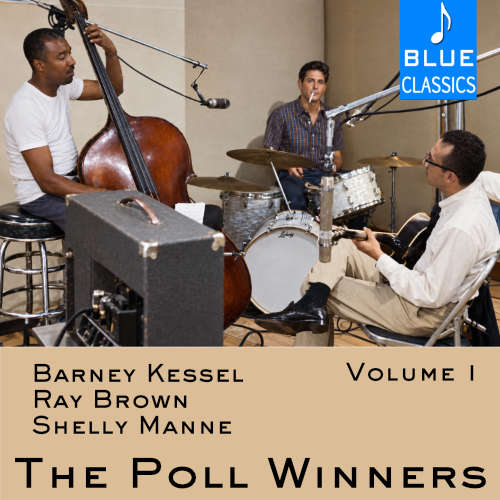 The Poll Winners Vol 1
 Easy Like Music to Listen to
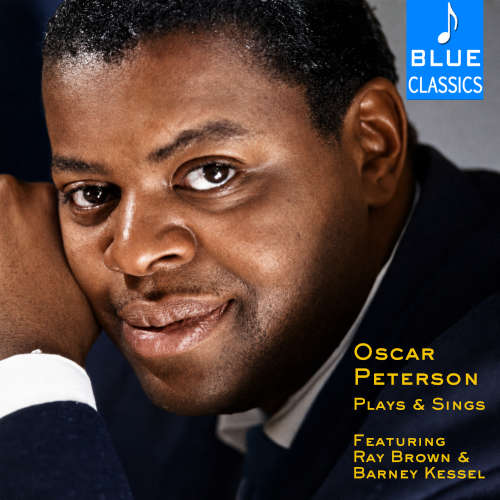 Oscar Peterson Plays & Sings
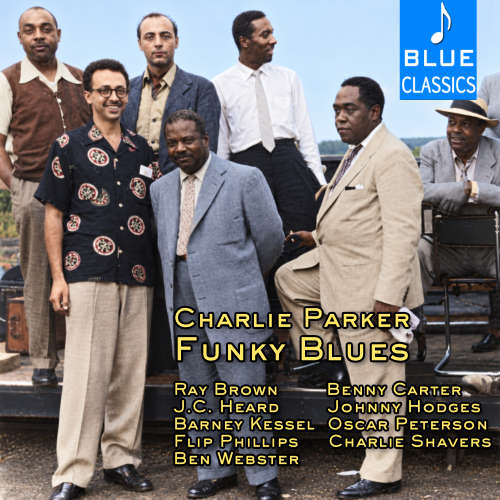 Funky Blues
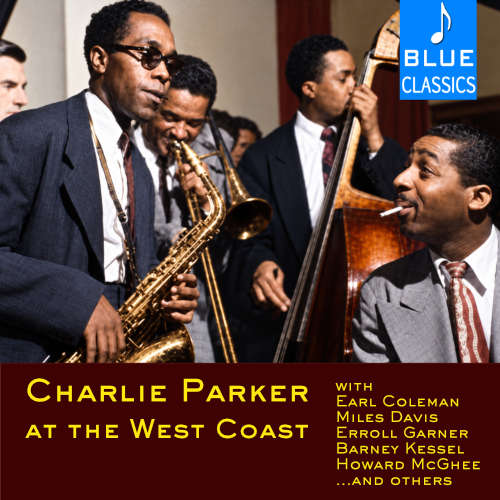 At the West Coast

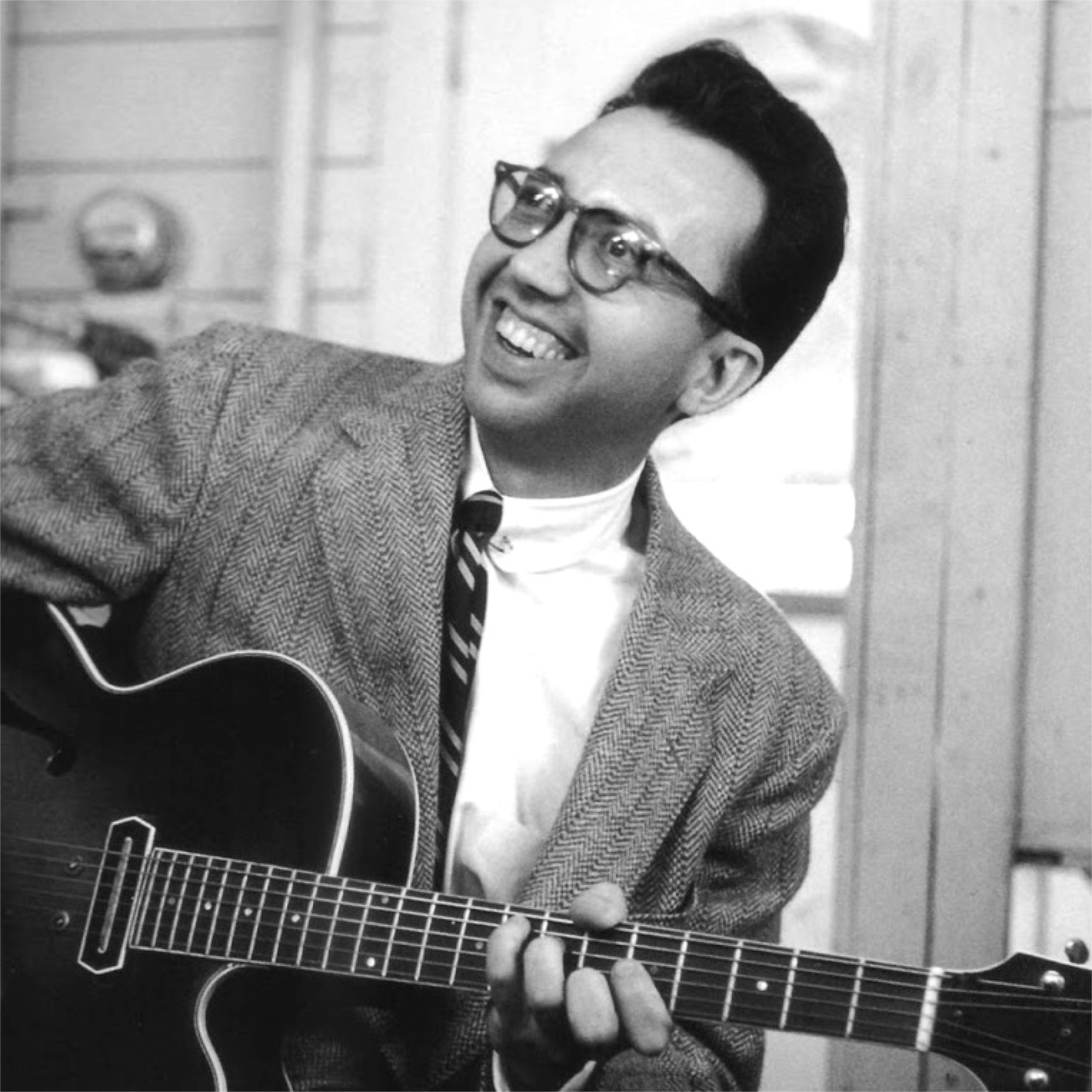
Barney Kessel - guitarist
Barney Kessel (b. October 17, 1923 – d. May 6, 2004) was an American jazz guitarist whose career encompassed bebop, West Coast jazz, small-group performance, and an extensive body of studio work in radio, television, film, and popular music. Born in Muskogee, Oklahoma, Kessel became one of the most active guitarists of his generation and recorded both as a leader and as a sideman from the 1940s through the early 1990s.Kessel came from a Jewish family, and his father, an immigrant from Hungary, owned a shoe shop. Kessel was largely self-taught as a guitarist. According to biographical accounts, he had only three months of formal guitar lessons, beginning at the age of twelve. He first became interested in the instrument after seeing a guitar in a music-store window while working on a newspaper route.
As a teenager, Kessel became increasingly involved in the local jazz scene. His principal early influence was Charlie Christian, whose electric guitar work with Benny Goodman had demonstrated the instrument's possibilities as a solo voice within a jazz ensemble. Kessel developed a style based on single-note lines, chordal playing and a detailed knowledge of harmonic movement. His later playing would remain closely connected to the swing and bebop traditions that had shaped him during his formative years.
Kessel began working professionally in the early 1940s. In 1943, he played with the band fronted by comedian and entertainer Chico Marx. In 1944 he joined the Charlie Barnet Orchestra, remaining with the band into 1945. He subsequently worked with Artie Shaw in 1945 and also recorded with Shaw's smaller Gramercy Five group.
One of Kessel's early appearances was particularly significant for his visibility as a jazz guitarist. He appeared in the 1944 jazz short film Jammin' the Blues, in a performance featuring several leading musicians of the period. His playing in the film contributed to the emergence of a recognisable image of Kessel as part of the younger generation of jazz musicians developing beyond the swing-era big bands.
By the middle of the 1940s, Kessel had become associated with the developing bebop movement. He worked and recorded with musicians connected to the new style, while also retaining strong links with swing. Unlike some musicians who concentrated exclusively on the emerging bebop vocabulary, Kessel continued to move comfortably between different settings.
Kessel moved to Los Angeles, where he became increasingly active as both a jazz musician and a studio player. His work in Los Angeles eventually extended far beyond jazz. He became a first-call guitarist for recording sessions connected with radio, television, motion pictures, and popular music. According to biographical accounts, he may have been among the most frequently recorded musicians in the American music industry.
At the same time, Kessel continued to record jazz as a leader. Beginning in 1953, he made an extended series of albums for Contemporary Records, including Easy Like, Kessel Plays Standards, and Music to Listen to Barney Kessel By. His work for Contemporary established a substantial catalogue of small-group recordings and became closely associated with the West Coast jazz scene.
Kessel's playing during these years was particularly associated with his harmonic knowledge. He was known for his ability to construct melodic lines directly from chord progressions and to use different chord inversions and extensions in his accompaniment. His electric-guitar sound was generally warm and clearly articulated, produced with hollow-body archtop instruments and a tube amplifier.
In 1952, Kessel became part of the Oscar Peterson Trio, initially alongside Peterson and bassist Ray Brown. He toured with the group for approximately one year, from 1952 to 1953. Kessel's participation came during the period when Norman Granz was developing Peterson as one of the major pianists associated with his concert and recording organisation.
After Kessel left the Peterson Trio, Herb Ellis became the guitarist. Kessel and Ellis would later work together again in the group Great Guitars, where they were joined by guitarist Charlie Byrd.
One of Kessel's most important recording partnerships began in the mid-1950s with bassist Ray Brown and drummer Shelly Manne. The three recorded a series of albums under the name The Poll Winners, beginning with The Poll Winners in 1957. The name referred to the fact that the three musicians had all been selected in readers' polls. The group recorded several albums for Contemporary, including The Poll Winners Ride Again! and Poll Winners Three!.
The Poll Winners sessions provided a setting in which Kessel could work in a particularly open trio format. Without a piano occupying the harmonic centre, the guitar assumed a larger role in defining harmony and melody. Brown and Manne provided a rhythm section capable of reacting closely to Kessel's phrasing while maintaining the rhythmic clarity associated with the group's recordings.
Kessel's activities in Los Angeles also brought him into the world of popular music and commercial recording. He worked on records by singers and pop artists and participated in film and television sessions. His studio work became so extensive that his guitar could often be heard on recordings without his name appearing prominently in the public presentation of the music. All About Jazz notes that listeners could encounter Kessel's playing on popular radio programmes and in films during the 1950s and 1960s.
This dual career continued for many years. Kessel's studio work provided financial stability while his jazz performances and recordings allowed him to develop his own musical projects. The National Jazz Archive's interviews with Kessel describe this balance directly: his studio work supported his jazz career until the late 1960s, while he also continued touring, recording, and performing with his own groups.
Kessel was also involved in the development and marketing of musical instruments. Kay Guitars introduced Barney Kessel signature models in the late 1950s, followed by Gibson, which introduced the Barney Kessel Regular and Custom models in 1961. These instruments were based on the archtop electric-guitar design associated with Kessel's playing.
During the 1960s Kessel continued to balance studio assignments with jazz performances. He also worked as a musical director for television and became involved in record production. His activities extended beyond performance: he wrote instructional material and contributed articles to Guitar Player magazine. He also authored The Guitar: A Tutor, published in 1967.
Kessel's position within the Los Angeles music industry gave him contact with musicians from a wide range of backgrounds. He owned Barney Kessel's Music World in Hollywood from 1967 to 1970, a guitar shop that also became a meeting place for professional musicians. The shop attracted customers including John Lennon, George Harrison, and Eric Clapton.
At the end of the 1960s, Kessel began moving away from the studio-based career that had occupied much of his working life. After touring Europe with George Wein's Newport All-Stars in 1968, he spent a year living in London, 1969–70, and toured elsewhere in Europe. The National Jazz Archive describes this period as a turning point after which Kessel devoted himself more fully to performing jazz.
In the 1970s Kessel became a member of Great Guitars, alongside Herb Ellis and Charlie Byrd. The group toured internationally and recorded extensively. Its repertoire centred on jazz standards, with the three guitarists alternating between ensemble playing, accompaniment, and individual solos. The National Jazz Archive notes that the group continued performing and recording until 1992.
Kessel also continued to lead his own recording projects during the 1970s and 1980s. His later recordings appeared on labels including Concord Jazz, Sonet, Black Lion, RCA Victor, and Savoy. He continued to perform with both established and younger musicians and remained active on the international jazz circuit.
In addition to the Great Guitars projects, Kessel returned frequently to small-group formats. His recordings from the later decades of his career preserved the characteristics associated with his playing since the 1950s: an emphasis on melody, harmonic movement, clear articulation, and interaction with the rhythm section.
Kessel's performing career came to an end after he suffered a stroke in 1992. He was no longer able to work as a professional musician at his previous level. His recordings, however, continued to be reissued, and archival material from earlier periods of his career also appeared in subsequent decades.
He was diagnosed with inoperable cancer in 2001 and died on May 6, 2004, in San Diego, California, at the age of 80.
Barney Kessel's career illustrates the changing role of the jazz guitarist in the United States after the Second World War. He belonged to a generation influenced by Charlie Christian and the swing tradition, participated in the development of bebop, became an important figure in West Coast jazz, and simultaneously established a substantial career as a studio musician. His recordings range from small-group jazz and guitar-led ensembles to commercial sessions, film, television, and popular music.
His work with Oscar Peterson, Ray Brown, Shelly Manne, Herb Ellis, Charlie Byrd, and numerous other musicians provides a record of the different musical contexts in which the electric guitar developed during the second half of the twentieth century. The breadth of his recording career also explains why Kessel's guitar can be found across a large and varied body of recordings, from dedicated jazz albums to sessions created for the wider American recording industry.